


Nigeria’s Waste Crisis Is No Longer a Warning We Are Living It- KECAF
Written by Kehinde Kenku, Temidayo Anthony
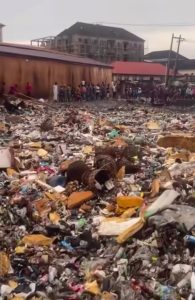
KECAF Africa (Kenku Education and Climate Awareness Foundation) stated that for years, environmental experts, climate advocates, and concerned citizens have warned that Nigeria was heading towards a waste crisis. Today, that warning has become our reality.
As our CEO, Kehinde Kenku, recently highlighted in an earlier article on the Lagos waste crisis, poor waste management, blocked drainage systems, and weak environmental enforcement were gradually creating a disaster waiting to happen. Sadly, that disaster is now unfolding before our eyes.
Across Nigeria, especially in Lagos right now, heavy rainfall has become a daily occurrence this season. But rain is not the real problem. The real problem is what happens when it falls.
There was a graphic sometime ago circulating online which perfectly illustrates the cycle: What we do, what you cause, and what you complain about. We litter our streets, the waste ends up in gutters and drainage channels, the drains become blocked, and when the rain comes, the water has nowhere to go. The result is flooding, polluted streets, damaged properties, and communities brought to a standstill.
Today, many roads are submerged. People are forced to walk through dirty floodwater that reaches their knees. That water is not just rainwater, it carries plastic bottles, food waste, sewage, and every piece of rubbish that was carelessly thrown into the environment.
Cars have been stranded. Homes have been flooded. Businesses have been forced to close. Families cannot leave their houses because entire neighbourhoods are underwater.
This is not simply a flooding problem.
It is a waste management crisis.
It is an environmental crisis.
It is a climate crisis.
For too long, responsibility has been shifted from one side to another. Government agencies blame residents for indiscriminate dumping of refuse, while citizens point to poor waste collection, inadequate drainage systems, and weak enforcement. The truth is that both sides have a role to play.
Citizens must stop treating roads, canals, and gutters as dumping grounds. At the same time, governments at every level must invest in modern waste management systems, improve drainage infrastructure, enforce environmental laws, and ensure that funds allocated for environmental protection are used transparently and effectively.
Lagos frequently speaks about becoming a climate-conscious city. Across Nigeria, we hear commitments about sustainability and environmental protection. Yet many communities continue to experience the same preventable disasters every rainy season.
People are asking difficult questions now.
Where are the results?
Where are the investments in environmental protection?
Where are the systems that should prevent this from happening year after year?
These are not unreasonable questions. They deserve honest answers.
If nothing changes, the consequences will only become more severe as climate change brings more intense rainfall and more extreme weather events.
This moment should serve as a wake-up call for everyone. Protecting our environment is not the responsibility of government alone, and it is not the responsibility of citizens alone. It requires collective action, accountability, and the political will to build systems that work.
Nigeria’s waste crisis did not happen overnight, and it will not disappear overnight either. But every meaningful solution begins with a decision to act.
The question we must all answer now is simple: How do we get out of this crisis before it gets even worse?
