


Lagos Waste Crisis, One Year Later: When Government Failure Turns Citizens Into Culprits
By Kehinde Balikis Kenku

Last year, I wrote an article on what I described as the Lagos waste war, a crisis where both the government and residents shared responsibility for the failure of waste management in the state. At the time, my position was balanced: citizens needed to do better, and the Lagos State Government needed to improve access, communication and consistency through LAWMA and its operators.
It is now 2026, and sadly, I am writing the same article again, only this time, with far less patience and far more disappointment. Because one year later, the situation has not improved. In fact, in many communities, it has become worse. And this time, the bulk of the blame no longer lies with residents.
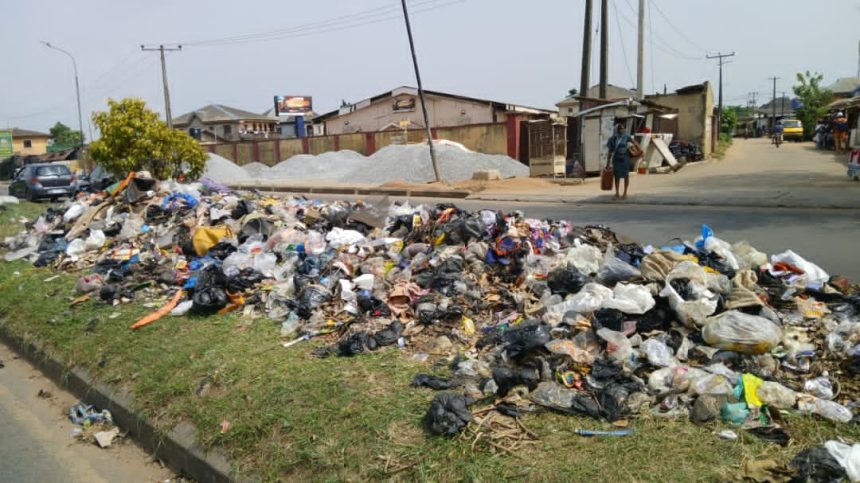
It lies squarely with the Lagos State Government Last year, one of my major complaints was that LAWMA operators were not accessible in many communities. In response, officials argued that trucks were deployed, announcements were made, and that residents simply did not cooperate or take waste management seriously. That argument no longer holds water in 2026. In my community and surrounding areas, LAWMA has not picked up waste in almost six onths. Six months. Not weeks. Not days. I personally placed calls, twice, to ask why waste collection had stopped. The response was shocking but revealing: there is no where to dump the waste.
The landfill close to us, around Alimosho, near the General Hospital in Igando, is completely filled. The alternative dumping site is reportedly in Badagry, which operators say is too far and economically unrealistic for them to service regularly. On what happens next? Nothing.
my stem That Forces Law-Abiding Citizens to Break the Rules as waste continues to pile up in homes. Flies multiply. Health risks grow. The same environmental dangers we are warned against, cholera, malaria, respiratory diseases, tare us in the face daily.
Selective Sanitation Is Not Policy the government only seems to act when waste becomes a public embarrassment.
When videos go viral, when refuse blocks major roads, or when complaints become too loud to ignore. But inside the communities? Silence. This is not governance. This is reactionary sanitation.
These, places like Obalende bridge and its environment recently received attention. The area was cleared, and expected to be redeveloped into a modern, well structured transport hub to be called “Y’ELLO Bus Park. That is commendable. But what about the waste that piles up daily on inner streets, in residential areas, and across communities that never makes the headlines?
Cleaning one spot while neglecting ten others is not a solution, it is cosmetic governance. limate
Talk Without Environmental Action, What makes this failure even more painful is the hypocrisy around climate change conversations. Government officials speak passionately about climate action, Sustainability, and environmental responsibility, yet the most basic environmental duty, waste disposal, remains unresolved. How can we fight climate change while drowning refuse?
How can residents be environmentally responsible when the system designed to support them has collapsed?
The 2026 Question Lagos Must Answer
This is no longer about blaming the Residents. Many of us are willing to pay. Many of us cant to comply. But compliance is impossible when there is no functioning system So the question for 2026 is simple and urgent: That is the Lagos State Government doing about waste disposal? There are the new dumping sites?
That long-term infrastructure is being built to support a growing population? Then will this cycle finally end? because until these questions are answered with action, not press statements, lagos waste crisis will continue, year after year, article after article.
